


RETHINKING IDENTITY IN RETIREMENT
- Derek Hagen

- Jul 23
- 3 min read
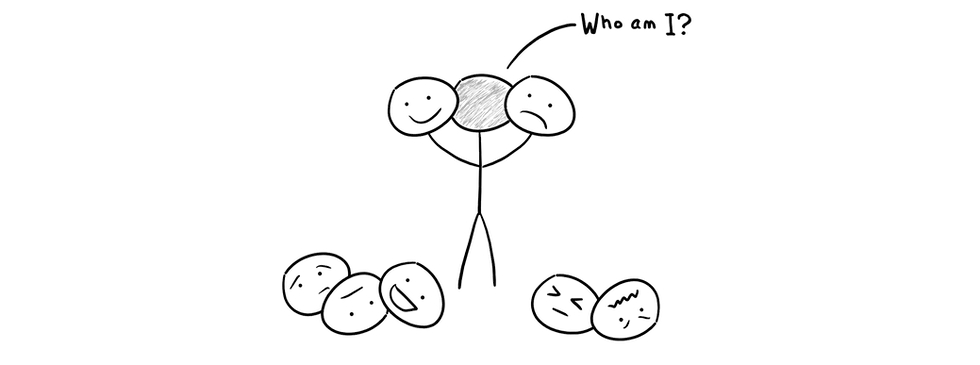
❝You wanna make an omelet, you gotta break some eggs.❞ -Tyler Durden, Fight Club
Your job was never who you are, but retirement forces you to prove it.
I'm in a retirement coaching training session. The trainer says he meets a lot of people who struggle with retirement. They used to be a doctor, an engineer, a developer, a professional tennis player. Now they struggle every time someone asks: "So what do you do?"
The answers that start with "I used to be" are ungratifying.
If we believe our purpose was our job, then when we retire, we lose our purpose. That's the hidden downside nobody puts in the retirement brochure.
WORK IS AN IDENTITY, NOT JUST A JOB
What you do and who you are aren't the same thing. You aren't your job. You aren't your tasks. But over time it can feel like they've merged.
Author Tim Urban describes identity as something like a backpack. An empty backpack is who you are at the core. Every role you play, everything you do, is something you put in. Professional. Parent. Friend. Healthy person. Dog lover. Over time, the backpack gets heavy.
But the biggest thing most people put in is the job. It's the first thing others ask about.

For most of your working life, you had a quick answer. You reached into the backpack and grabbed the most accessible identity.

That identity stays. It wants to stay, even after you've retired. This happens to nurses, teachers, business owners, military personnel, parents, anyone whose role became load-bearing for their sense of self.

The issue isn't that people liked what they did. Many people love their work. The issue is that when the work ends, it leaves a hole where an identity used to be.
BREAKING EGGS TO MAKE OMELETTES
Here's what makes identity transitions hard: you can't build a new identity while the old one is still fully intact. Something has to give way first.
Mark Manson puts it directly: you have to be willing to let go of old identities to make room for new ones. The real fear isn't change. It's the death of who you thought you were. But that loss, he says, is the door to something better.

If the backpack only has one thing in it, and that thing has to go, there's nothing left to stand on. That's concentration risk applied to identity. The more load-bearing the single identity, the harder the breaking.
|
 |
The Meaning in Life Questionnaire assesses two dimensions of meaning in life, the presence of and search for meaning. Presence measures how full you feel your life is of meaning. Search measures how engaged and motivated you are in efforts to find meaning in your life. |
 |
|
YOUR PERSONA
The word persona comes from the Latin word for mask. Carl Jung used it to describe the face we present to the world.
When the work mask comes off, there's room for another. Spouse. Parent. Volunteer. Neighbor. Mentor. Reader. The point isn't which mask you choose. The point is that you get to choose.
Before retirement, the job chose your primary mask for you. Retirement hands the choice back.

WHO DO YOU WANT TO BE
Before retirement, you had an easy answer to "what do you do?" Retirement opens the door to choosing how you answer that, or whether the question even matters anymore.
If someone asks what you do and you don't have an answer, that might be okay. It might be the first honest moment you've had to find out who you are outside of the job.
The answers that start with "I used to be" are ungratifying. The ones that start with "I am" are worth finding.
You get one life; live intentionally.
Interested in more like this? Subscribe and get updates sent directly to you.
If you know someone else who would benefit from reading this, please share it with them. Spread the word, if you think there's a word to spread.
To share via text, social media, or email, simply copy and paste the following link:
REFERENCES AND INFLUENCES
Brooks, Arthur: From Strength to Strength
Frankl, Viktor: Man’s Search for Meaning
Manson, Mark: Everything is Fucked
Manson, Mark: The Subtle Art of Not Giving a Fuck
Schwartz, Barry: Why We Work
Urban, Tim: What's Our Problem?
Yalom, Irvin: Staring at the Sun


